**On Pre-Order Only** Pigeon Pea PLANT – Heirloom & Untreated – Cajanus cajan – Perennial Pea – Nitrogen-Fixing Superfood
Bring one of the world’s most versatile and nutritious legumes into your garden with this heirloom, untreated Pigeon Pea plant (Cajanus cajan). Also known as Red Gram, Congo Pea, Gungo Pea, or Arhar, this remarkable plant has been cultivated for over 3,000 years and is a staple food crop across Asia, Africa, and the Caribbean. I have a small number of established plants available now, grown naturally in my permaculture food forest.
Pigeon Pea is a fast-growing, drought-tolerant perennial shrub that can reach 2 to 4 metres in height. In tropical and subtropical regions like QLD and northern NSW, it grows as a short-lived perennial, living for about five years and producing harvests year after year. In cooler temperate areas (VIC, SA, southern NSW), it can be grown as a summer annual. It also grows well in large pots, making it accessible to gardeners across Australia.
What makes Pigeon Pea truly special is its ability to fix nitrogen in the soil. Like other legumes, it forms nodules on its roots containing bacteria that take nitrogen from the air and convert it into a form plants can use. This means it not only feeds you but also enriches your garden soil, making it an invaluable addition to any food forest, permaculture garden, or edible landscape.
Do you need more space to grow food? Check out our fantastic extra-large grow bags here.
Uses:
Fresh or Dried Peas: Harvest immature green seeds and cook them like fresh peas, or allow pods to dry on the plant and store the dried seeds for months. They have a delicious, nutty flavour and a slightly chewy texture.
Split Peas (Dal): In Indian cuisine, dried pigeon peas are split and hulled to make toor dal, the base for countless curries, soups, and stews.
Flour: Grind dried seeds into a protein-rich flour for baking or thickening sauces.
Animal Fodder: The leaves, pods, and seeds are excellent, protein-rich feed for chickens, goats, cattle, and other livestock.
Green Manure & Cover Crop: Chop and drop the foliage to create nutrient-rich mulch, or grow it as a cover crop to prevent erosion and build soil fertility.
Living Fence & Windbreak: Plant as a dense, fast-growing hedge or windbreak for your garden.
Shade Plant: Use it to provide dappled shade for more delicate vegetables and herbs.
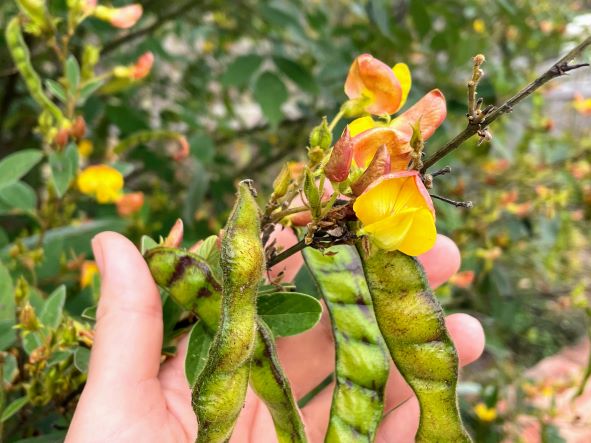
Pollinator Magnet: The bright yellow and orange flowers attract bees, butterflies, and other beneficial insects.
Nutrients & Health Benefits:
Pigeon Pea is a true nutritional powerhouse. Research has documented its remarkable health benefits.
High in Protein: Pigeon pea contains around 22–28% protein and has an amino acid profile similar to soy protein. It is one of the highest-protein legumes in the world.
Rich in Fibre: Supports healthy digestion, promotes regular bowel movements, and helps alleviate bloating and indigestion.
Abundant in Minerals: An excellent source of calcium, phosphorus, potassium, iron, and magnesium.
Vitamins: Contains significant amounts of vitamin C and folate, which help boost immune function.
Bioactive Compounds: Pigeon pea seeds contain multiple bioactive compounds that are therapeutic for diabetes, hypertension, hyperlipidemia, and certain forms of cancer.
Anti-inflammatory & Antioxidant: The leaves, roots, seeds, and pods are all high in phenolic compounds with anti-inflammatory, antibacterial, antioxidant, and anticarcinogenic properties.
Traditional Medicine: In traditional Chinese, Indian, African, and South American medicine, pigeon pea has been used to treat infections, diabetes, dysentery, ulcers, jaundice, sickle cell anaemia, hepatic disorders, cough, diarrhea, abdominal pain, and mouth sores. Leaves have been used to staunch blood, as an analgesic, and to kill parasites.
Note: Always do your own research before using any plant medicinally or making significant dietary changes. The information provided is for educational purposes only.
Growing Conditions & Planting Tips:
Pigeon Pea is remarkably easy to grow and thrives in challenging conditions where other plants struggle. Follow these guidelines for success.
Climate: Perennial in tropical and subtropical regions (QLD, NT, northern NSW). It is frost-sensitive – in cooler areas (VIC, SA, southern NSW), grow it as a summer annual or in a large pot and move indoors during winter.
Position: Requires full sun – at least 6–8 hours of direct sunlight daily for the best flowering and pod production. Less sun produces tall, leafy plants with very few pods.
Soil: Tolerates a wide range of soil types, including poor, sandy, and even clay soils. Well‑drained soil is essential – it does not like wet feet. A slightly acidic to neutral pH (5.5–7.0) is ideal.
Watering: Water regularly to encourage establishment. Once established, Pigeon Pea is highly drought‑tolerant. Water deeply but infrequently.
Fertilising: Pigeon Pea is a nitrogen-fixer, so it does not need heavy feeding. A light application of compost at planting time is sufficient. Too much nitrogen will produce lots of leaves but fewer pods.
Spacing: Space plants about 1 metre apart to allow room for the shrub to spread. Can be planted closer for a dense hedge or windbreak.
Pruning: Prune after harvest to encourage bushier growth and extend the plant’s productive life. Cut back by about one-third to promote new shoots.
Container growing: Grows well in large pots at least 30–40 cm deep and wide. Use a quality potting mix with good drainage. Container-grown plants will need more frequent watering and occasional feeding.
Life span: As a perennial, Pigeon Pea typically lives for about 5 years, producing harvests year after year.
Care After Receiving Your Plant:
Your Pigeon Pea plant has been grown with love. Follow these steps for a smooth transition:
Unpack immediately – Remove the plant from packaging. Check the soil; if dry, give it a light drink.
Rest & recover – Place the plant in a sheltered, shaded spot out of strong wind for 2–3 days to reduce transplant shock.
Slow sun introduction – Most of our plants grow in partial shade. If you plan to move it to a sunnier position, do so gradually over 5–7 days to avoid leaf burn.
Transplant – Re‑pot into a larger container (at least 30 cm deep) or plant directly into the ground when roots fill the current pot. Space multiple plants about 1 metre apart.
Planting depth – Dig a hole slightly larger than the root ball. Plant at the same depth it was in the pot – do not bury the stem.
Water in well – Give it a deep, thorough watering straight after planting. Thereafter, water regularly until established.
Mulch lightly – A thin layer of sugar cane or straw mulch helps retain moisture and suppress weeds, but keep it away from the stem.
No fertiliser for 2 weeks – Let the plant settle before feeding.
Stake if needed – In windy areas, provide a small stake for support until the plant is established.
What You Will Receive:
One young, healthy Pigeon Pea plant (established seedling), grown untreated and heirloom, naturally with love in my permaculture food forest (Pacific Haven, QLD).
Shipping & Important Notes:
Dispatch: We usually send plants on Mondays to ensure they arrive fresh and before the weekend.
Shipping locations: Sending within Australia only, excluding Norfolk Island, NT, SA, TAS, and WA.
Pickup: Available by appointment from Pacific Haven, QLD.
Please Note: Do your own research before trying any new foods. Also refer to our full disclaimer in the footer of this page.