Poor Man’s Bean SEEDS – Heirloom & Untreated – Lablab purpureus – Perennial Bean – Nutritious, Productive & Beautiful
Bring one of the world’s oldest and most versatile legumes into your garden with these heirloom, untreated Poor Man’s Bean seeds (Lablab purpureus), also known as Hyacinth Bean, Dolichos Bean, or Lablab. This remarkable climbing vine has been cultivated for thousands of years across Africa and Asia, valued for its abundant harvests, striking flowers, and incredible resilience.
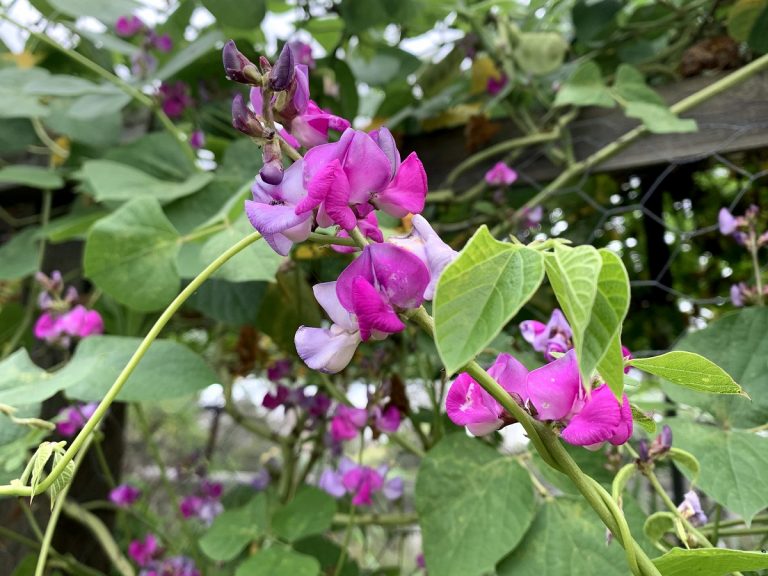
Poor Man’s Bean is a fast-growing, short-lived perennial that can live for up to five years in warm, frost-free climates. It produces vigorous, twining vines that climb eagerly up trellises, fences, and arbours, reaching several metres in a single season. The plant is adorned with attractive purple or white flowers followed by long, flat pods filled with protein-rich seeds. It is drought-tolerant once established, thrives in warm conditions, and fixes nitrogen in the soil, making it an invaluable addition to any food forest, permaculture garden, or edible landscape.
Do you need more space to grow food? Check out our fantastic extra-large grow bags here.
Uses:
Fresh Green Beans: Harvest the young, still-green pods and use them exactly as you would green beans – steamed, stir-fried, or added to curries, stews, and soups.
Dried Seeds: The mature dried seeds are a fantastic substitute for other dried legumes. Use them in dals, bean cakes, soups, and casseroles. They can also be sprouted like mung beans, fermented into tempeh, or processed into tofu.
Edible Leaves & Flowers: The young leaves and flowers are also edible and can be cooked as a nutritious leafy green vegetable.
Nitrogen Fixing: Like other legumes, Poor Man’s Bean forms root nodules that fix nitrogen from the air, enriching your soil naturally and benefiting surrounding plants.
Green Manure & Cover Crop: Chop and drop the abundant foliage to create nutrient-rich mulch, or grow it as a cover crop to suppress weeds and build soil fertility.
Animal Fodder: The leaves and pods are excellent, protein-rich feed for chickens, goats, and other livestock.
Ornamental: The beautiful purple or white flowers make this vine a stunning ornamental feature on any trellis or fence.
Nutrients & Health Benefits:
Poor Man’s Bean is a nutritional powerhouse, packed with protein and essential nutrients. Research highlights its impressive phytochemical profile, including phenolic acids and flavonoids associated with a wide range of therapeutic properties such as antioxidant, antimicrobial, anti-inflammatory, antidiabetic, and hepatoprotective activities.
High in Protein: Contains approximately 24–25% protein, one of the highest among cultivated legumes.
Rich in Essential Amino Acids: Includes lysine and tryptophan, which enhance its nutritional quality and digestibility.
Good Source of Carbohydrates: Provides around 62% carbohydrates for sustained energy.
Dietary Fibre: Supports healthy digestion and promotes gut health.
Vitamins & Minerals: Rich in vitamins, minerals, and bioactive compounds that contribute to overall health and well-being.
Omega-3 Fatty Acids: Contains alpha-linolenic acid (ALA), a plant-based omega-3 that supports brain and heart health.
Anticancer Potential: Preliminary research on Lablab purpureus pod extracts has demonstrated promising anticancer activity against breast cancer cells.
⚠️ Important Safety Note – Please Read:
Raw Poor Man’s Bean seeds and pods contain natural toxins (including cyanogenic glycosides and trypsin inhibitors) and must never be eaten raw. Fresh green pods and dried seeds must be thoroughly cooked before consumption. For dried seeds, soak overnight, then boil for at least 1.5 hours and discard the cooking water before eating. Young pods should be cooked until tender. Always do your own research and follow trusted recipes for preparing this legume safely.
Note: Always consult a qualified healthcare provider before using any plant medicinally or making significant dietary changes. The information provided is for educational purposes only.
Growing & Sowing Tips:
Poor Man’s Bean is remarkably easy to grow and thrives in warm conditions where other beans struggle.
Prepare seeds (recommended): Soak seeds in water for 12–24 hours before sowing to soften the hard seed coat and speed up germination.
Timing: Sow in spring after the last frost, when soil temperatures are warm (ideally above 18°C).
Direct sowing preferred: Plant seeds directly where they are to grow, as this bean dislikes transplanting. Sow seeds 3–5 cm deep, placing 2–3 seeds per hole and thinning to the strongest seedling.
Spacing: Space plants about 30–50 cm apart, with rows 80–120 cm apart.
Sun & position: Requires full sun – at least 6–8 hours of direct sunlight daily for vigorous growth and heavy pod production. It is intolerant of moderate to heavy shade.
Soil: Grows in a wide range of soils from deep sands to heavy clays, provided drainage is good. pH range 4.5–7.5 is suitable. Drought-tolerant once established.
Support: Provide a sturdy trellis, fence, or arbour for the vine to climb. It can also be grown as a bushy plant if pinched back.
Watering: Water regularly during establishment. Once mature, it is highly drought-tolerant and can extract water from deep in the soil.
Climate: Perennial in tropical and subtropical regions (QLD, NT, northern NSW). In cooler temperate areas, grow as a summer annual. It is frost-sensitive.
Harvesting: Green pods are ready 60–90 days after sowing. For dried beans, allow pods to mature and dry on the vine, then harvest and shell.
Seed Details:
Price: For 6 seeds, naturally grown in my permaculture food forest in Pacific Haven, QLD Australia.
Quality: Heirloom, untreated, open-pollinated.
Shipping & Important Notes:
Shipping locations: Sending within Australia only, excluding Norfolk Island, NT, SA, TAS, and WA.
Pickup: Available by appointment from Pacific Haven, QLD.
Please Note: Raw beans and pods are toxic and must be cooked thoroughly before consumption. Do your own research before trying any new foods. Also refer to our full disclaimer in the footer of this page.