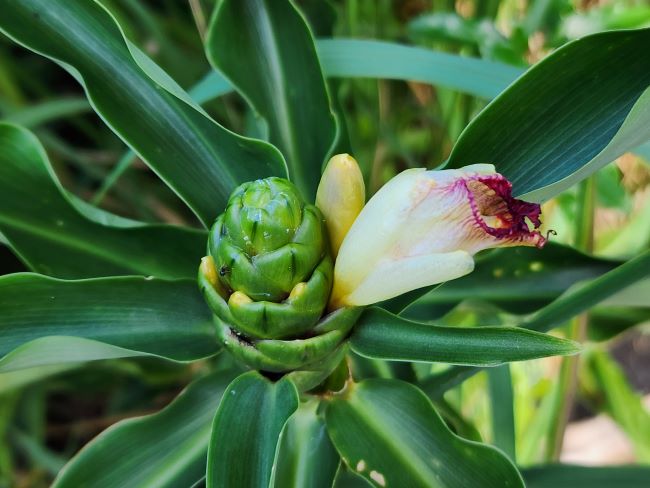
Insulin Ginger PLANT – Untreated & Heirloom – Insulin Plant – Spiral Flag – Costus Igneus
Introducing the remarkable Insulin Ginger Plant, a prized and attractive heirloom perennial valued in traditional wellness gardens. Known botanically as Costus igneus or Spiral Flag, this plant is celebrated for its ornamental spiral growth and vibrant foliage, as well as its historical place in herbal practices.
This untreated heirloom variety is a resilient, easy-to-grow tropical perennial that thrives in partial shade to full sun (with adequate moisture). It is not a true ginger but gets its common name from the shape of its leaves. The plant is primarily grown for its lush, lance-shaped leaves, which can be used fresh or dried to make a herbal tea.
Traditional Use & Nutritional Profile:
Traditionally, the fresh or dried leaves of Costus igneus have been used to make a mild, slightly sweet herbal infusion. The leaves contain beneficial plant compounds, including dietary fibre, antioxidants, and flavonoids. It is valued as a caffeine-free herbal addition to a balanced lifestyle.
Interesting facts: “Costus igneus, commonly known as insulin plant in India, belongs to the family Costaceae. Consumption of the leaves are believed to lower blood glucose levels, and diabetics who consumed the leaves of this plant did report a fall in their blood glucose levels. (Shetty et.al. 2010)”
This listing is for one established, small potted plant, lovingly propagated and nurtured with care in our permaculture food forest in Pacific Haven, QLD. A mature potted plant ensures a significant head start, allowing you to harvest leaves sooner than with smaller cuttings or seeds.
Your Planting & Care Guide
Immediate Care (After Delivery):
Water the plant thoroughly upon arrival.
Place it in a protected, partially shaded location for 3-5 days to recover from transit stress.
Keep it in its original pot during this acclimatisation period.
Planting Out:
Transplant into a larger pot or a sheltered garden bed when roots fill the current container.
Water well immediately after planting. It prefers consistently moist (but not waterlogged) soil, especially during warm weather.
For best results, plant in rich, well-draining soil. It performs excellently in slightly raised, organically rich garden beds.
Ongoing Conditions:
Light: Prefers bright, indirect light or partial sun. It can tolerate morning sun but should be protected from harsh afternoon rays.
Climate: A tropical perennial that loves warmth and humidity. It is frost-sensitive and should be grown in a pot in cooler regions for moving indoors in winter.
Feeding: Benefits from occasional feeding with a balanced organic fertiliser during the growing season (spring and summer).
Important Notes
Disclaimer: This plant is valued for traditional use. It is not a medicine, and this information is not intended to diagnose, treat, or cure any disease. Always consult with a qualified healthcare professional before using any new herb, especially if you have a pre-existing condition or are taking medication.
Shipping: We ship within Australia only. We cannot ship to Norfolk Island, NT, TAS, or WA.
Local Pickup: Available in Pacific Haven, QLD by appointment only.
General Disclaimer: Please conduct your own research and see the full disclaimer in our website footer.
References: Shetty, A. J., Choudhury, D., Nair, V., Kuruvilla, M., & Kotian, S. (2010). Effect of the insulin plant (Costus igneus) leaves on dexamethasone-induced hyperglycemia. International Journal of Ayurveda Research, 1(2), 100-102. https://doi.org/10.4103/0974-7788.64396